01 · The need
Music became inaccessible
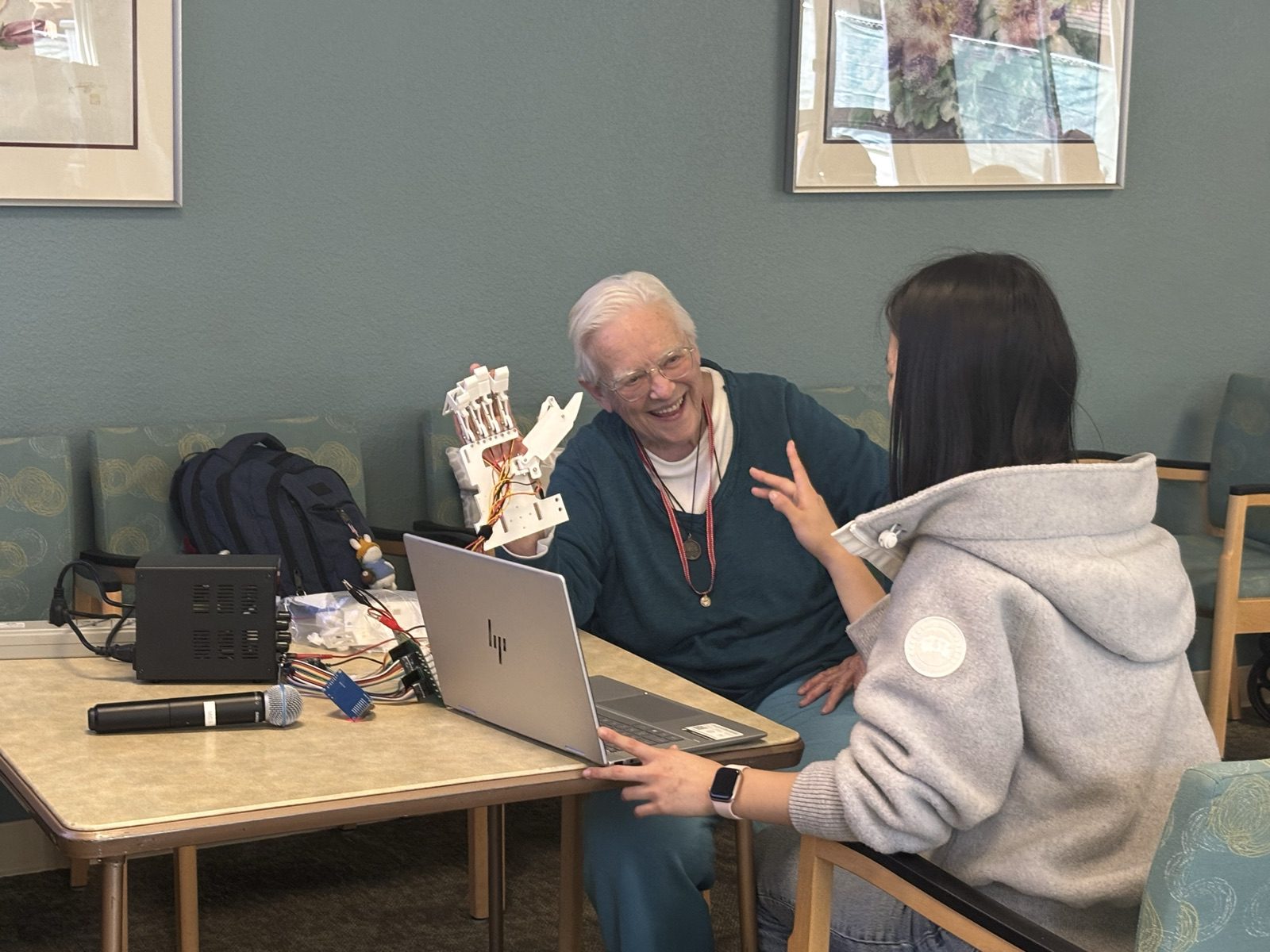
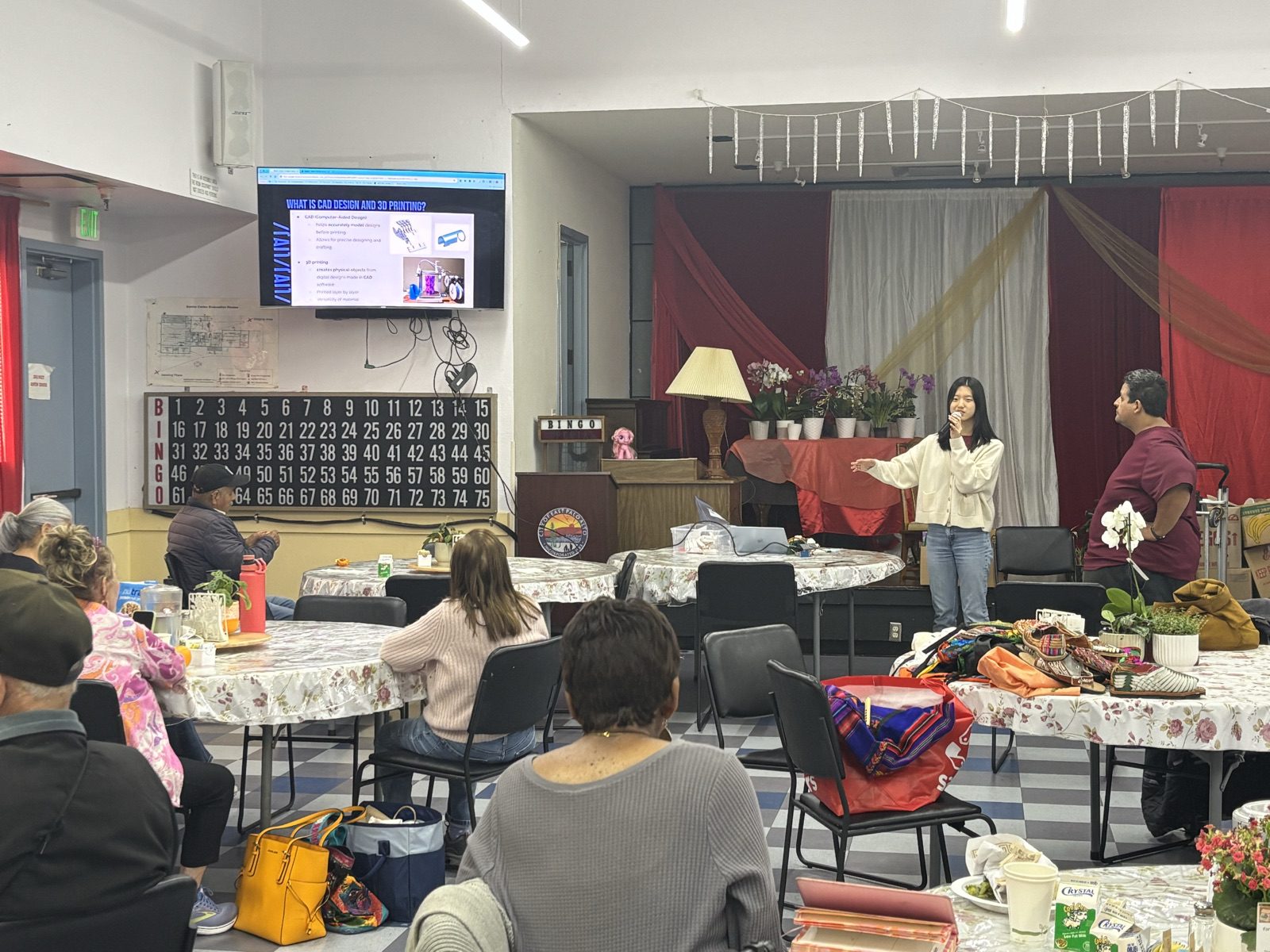
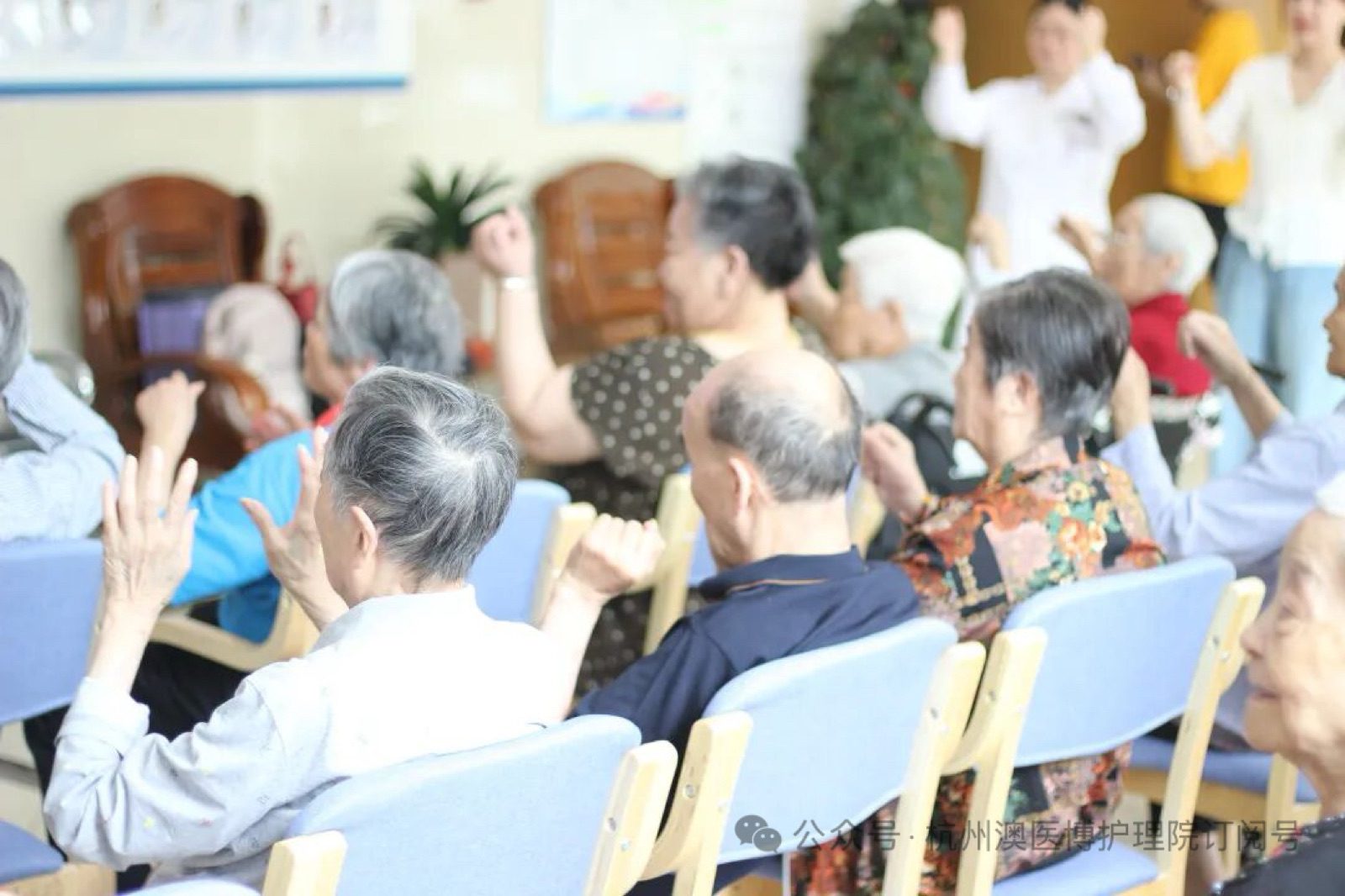
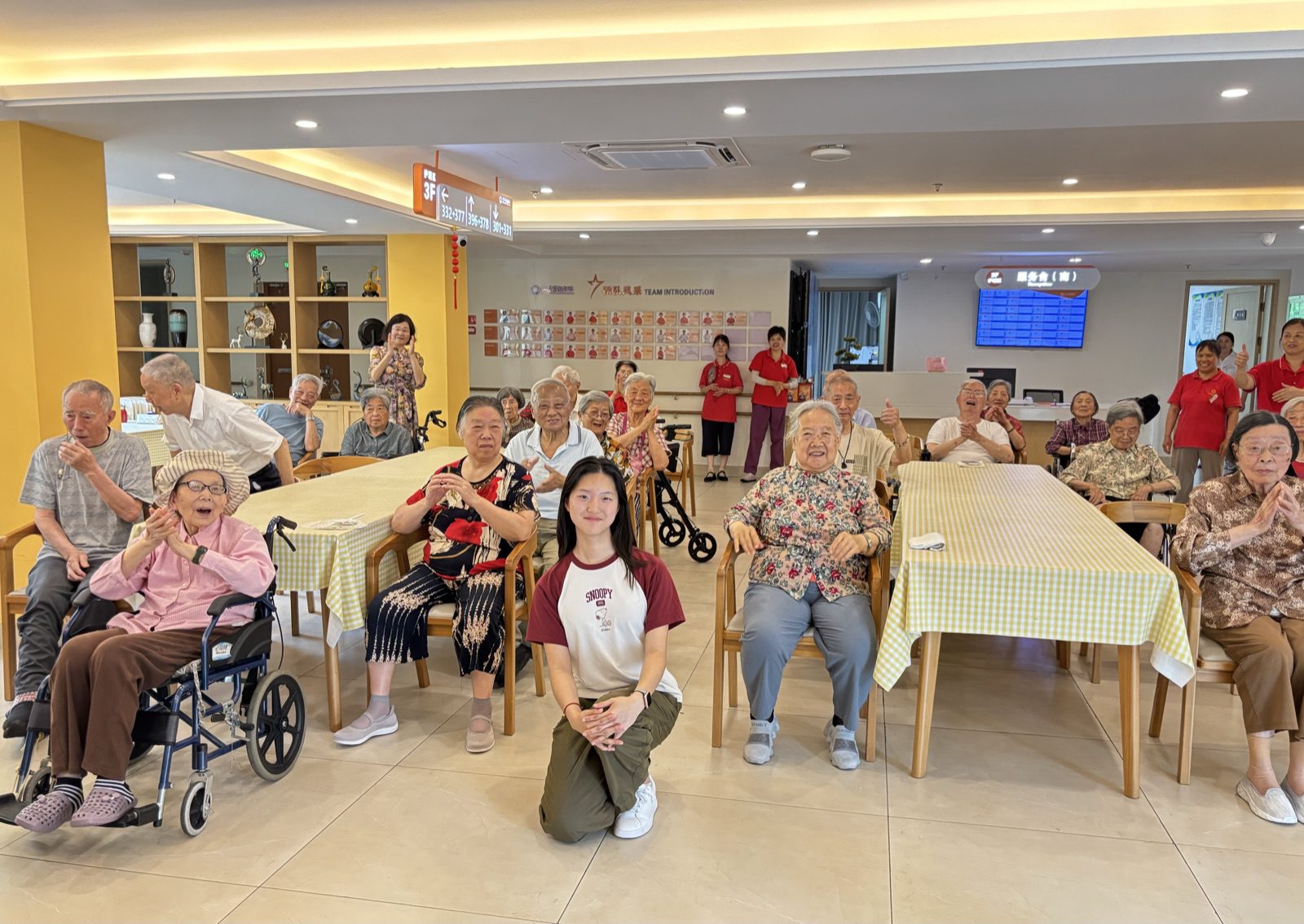
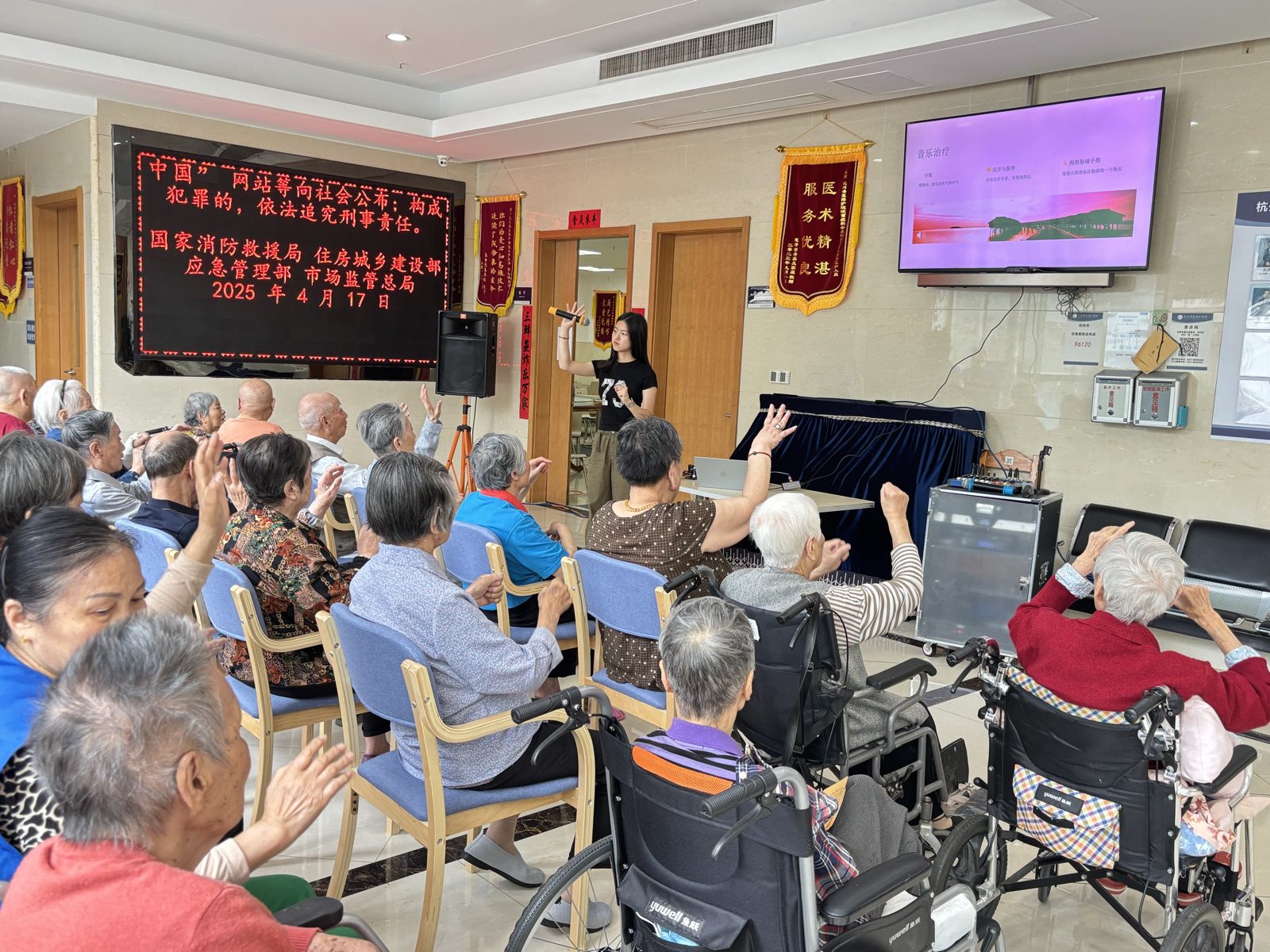
Since middle school, I have performed and volunteered at senior centers, where residents told me physical limitations kept them from instruments they loved.
A sensored glove that converts finger movement into music for hand rehabilitation — bringing accessible hand rehab and music-making to 220+ elderly users across 12+ senior centers, nursing homes, and youth centers in the US, China, and Canada.
01 · The need
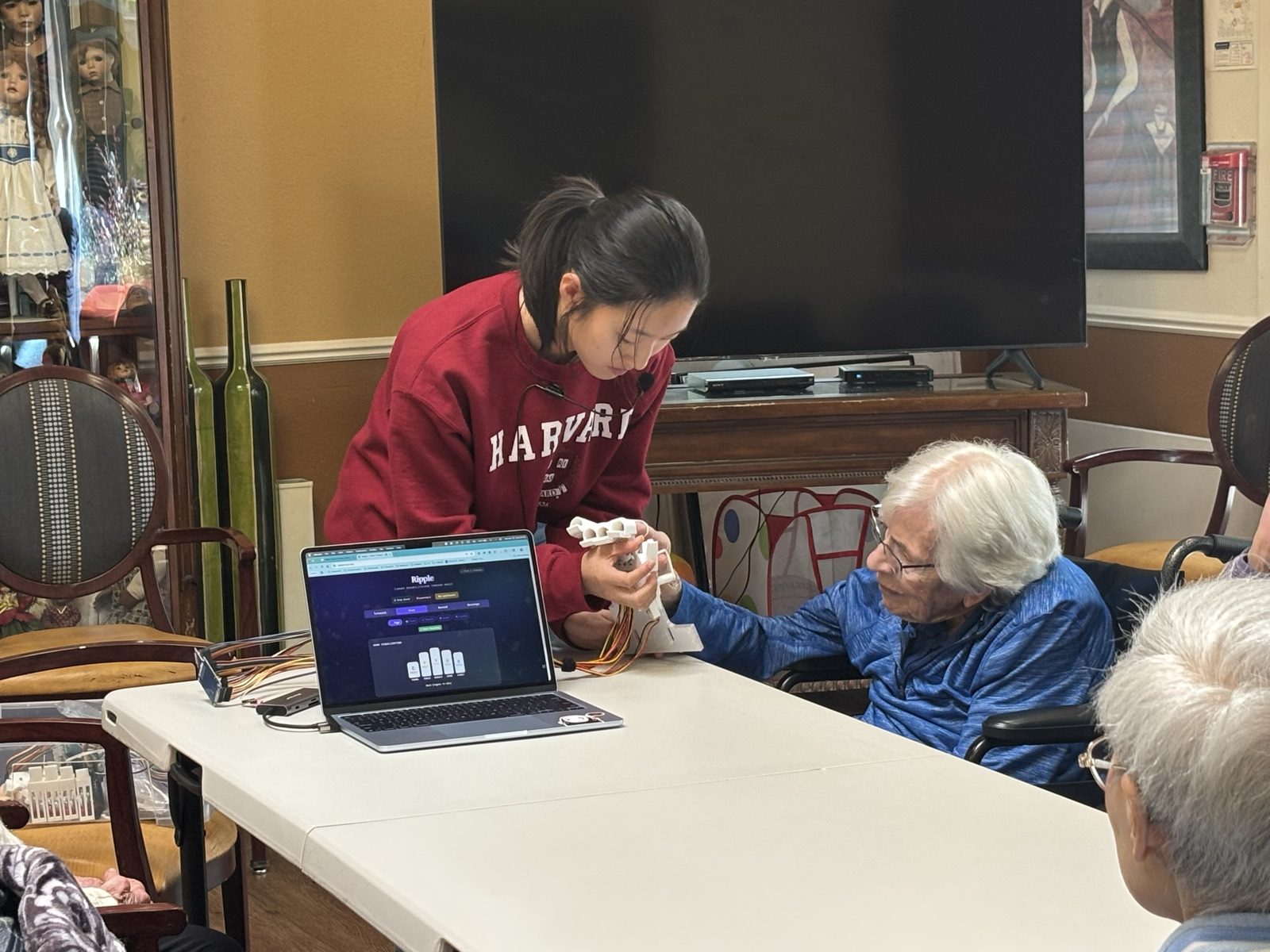
Since middle school, I have performed and volunteered at senior centers, where residents told me physical limitations kept them from instruments they loved.
02 · The response
Ripple turns rehabilitation movements into an accessible instrument—regardless of musical experience or physical ability.
Since middle school, I have volunteered at senior centers by performing piano and supporting residents. Over the years, I met many people who loved music and wanted to play an instrument but could no longer do so because of physical limitations.
I created Ripple to give them an accessible way to make and enjoy music while practicing the hand and finger movements involved in rehabilitation—regardless of musical experience or physical ability.
From rigid frame to fabric glove
Research, four hardware iterations, and one goal: make finger rehabilitation easier to wear, use, and enjoy.
Origin · Research + community
Dexterous-hand teleoperation research met years of listening to senior-center residents describe lost hand mobility.
Before building anything, I worked on “I Know Kung Fu,” a NeurIPS 2025 SpaVLE workshop paper on capturing dexterous-hand motion through VR teleoperation. At the same time, I was performing at senior centers through Shared Harmonies and hearing residents talk about the hand mobility they had lost. Ripple came from putting those two together.
September 2025 · Prototype
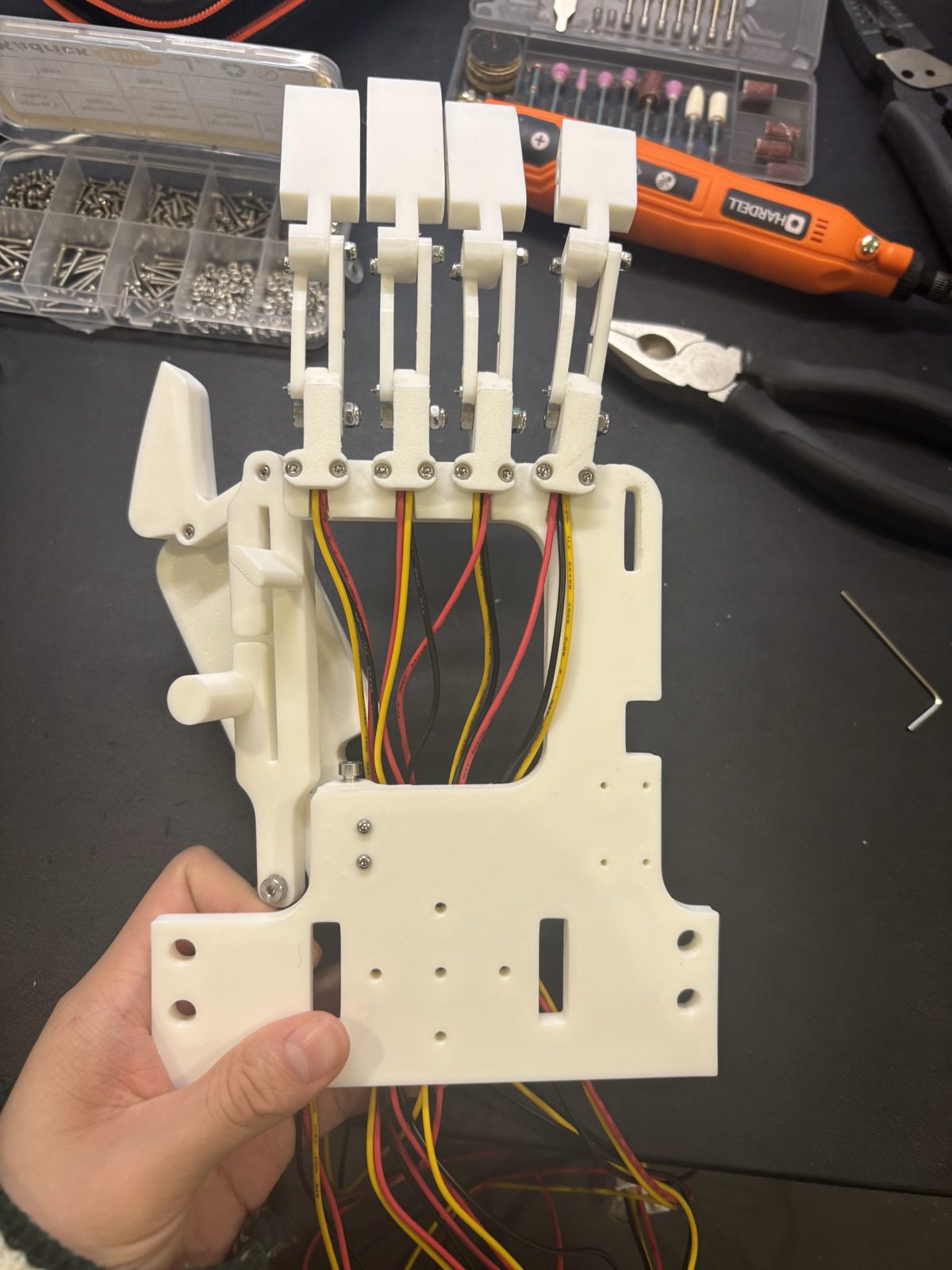
Custom exoskeleton, six rotary encoders, embedded firmware, and the first finger-to-note mapping.
Built the first prototype around a custom hand exoskeleton: a main PCB with an STM32 and ADS1256 stack, a rotary encoder on each finger, and firmware flashed by hand. Once encoder data was streaming, I wrote the first script that turned a finger’s angle into a note.
February–April 2026 · Iterations 1–2
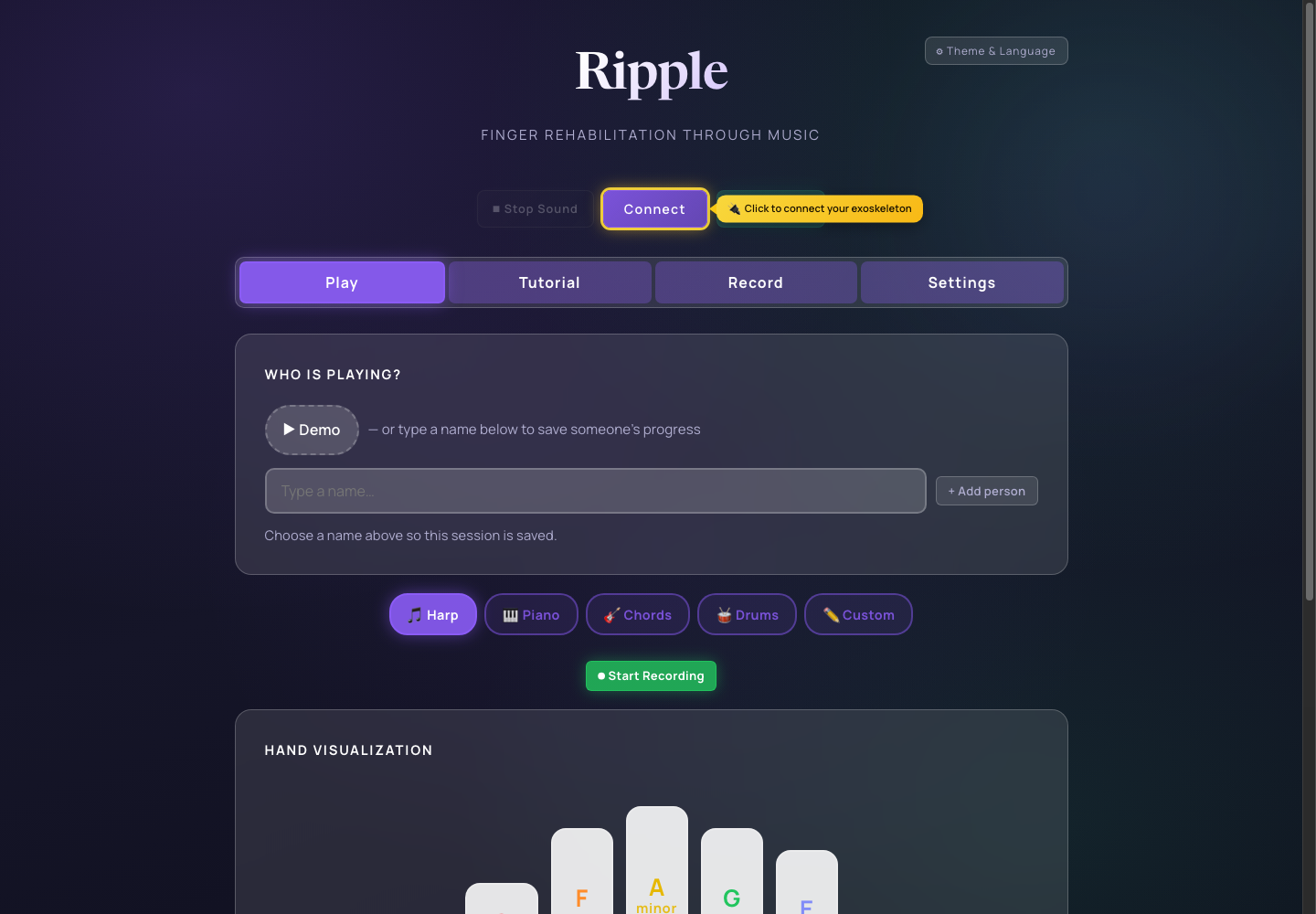
Live robot teleoperation, a plug-and-play web app, softer TPU, secure finger cots, and single-cable power.
First iteration: Calibrated all six encoders and mapped them to an Inspire Hand for a live teleoperation demo. Rebuilt the app as a single web page at ripplemusic.org using Web Serial and Web Audio, so anyone can plug in and play from a browser with nothing to install.
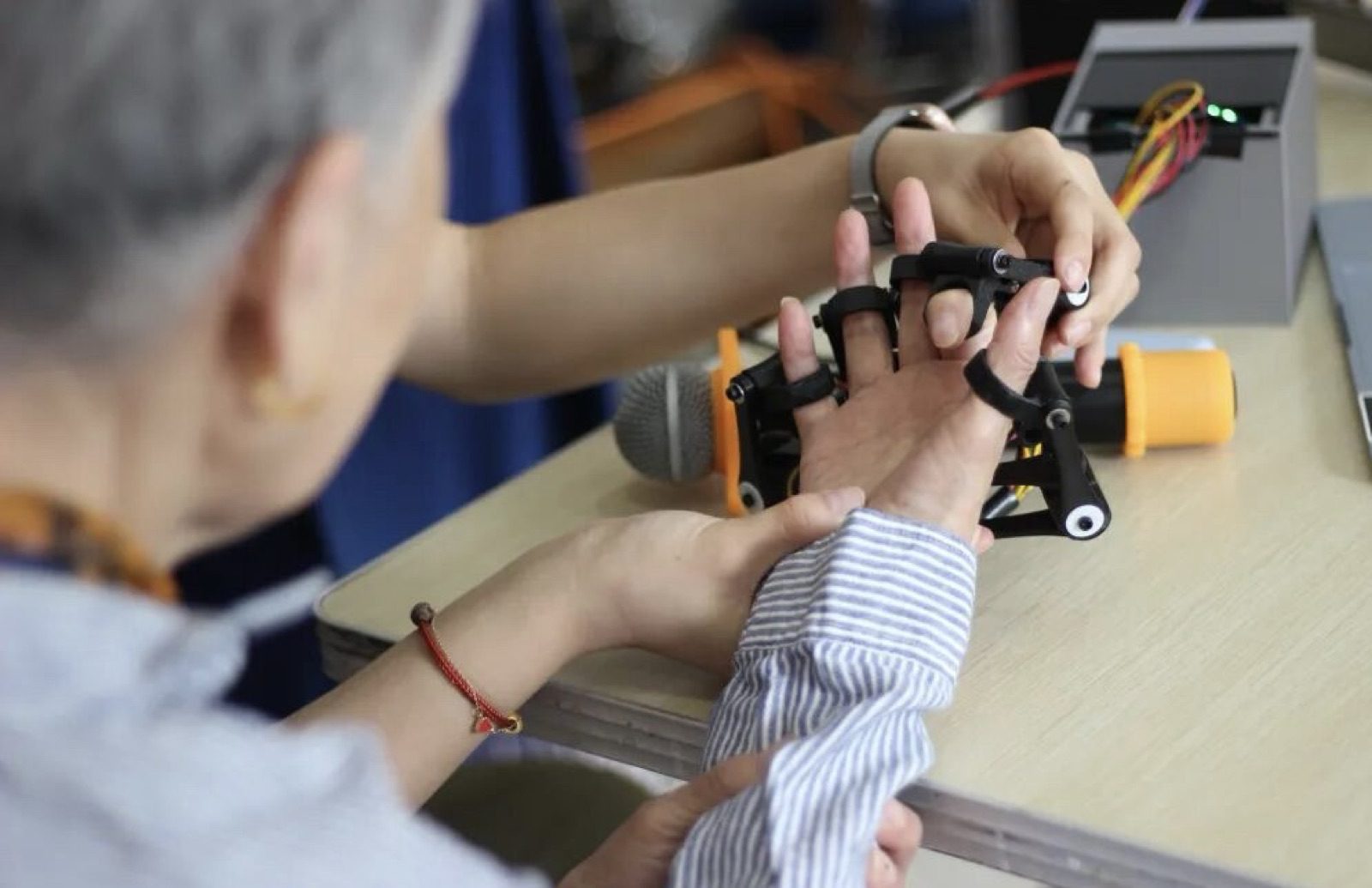
Second iteration: Reprinted the exoskeleton in TPU for a softer fit, which caused the clip-in finger covers to flex open and fingers to slide off the fingertip plates. Rubber finger cots on each plate fixed it: they grip, fit a range of hand sizes, and are cheap to replace. I also moved the electronics onto a USB power bank, so the device runs on a single cable.
May–June 2026 · Iterations 3–4
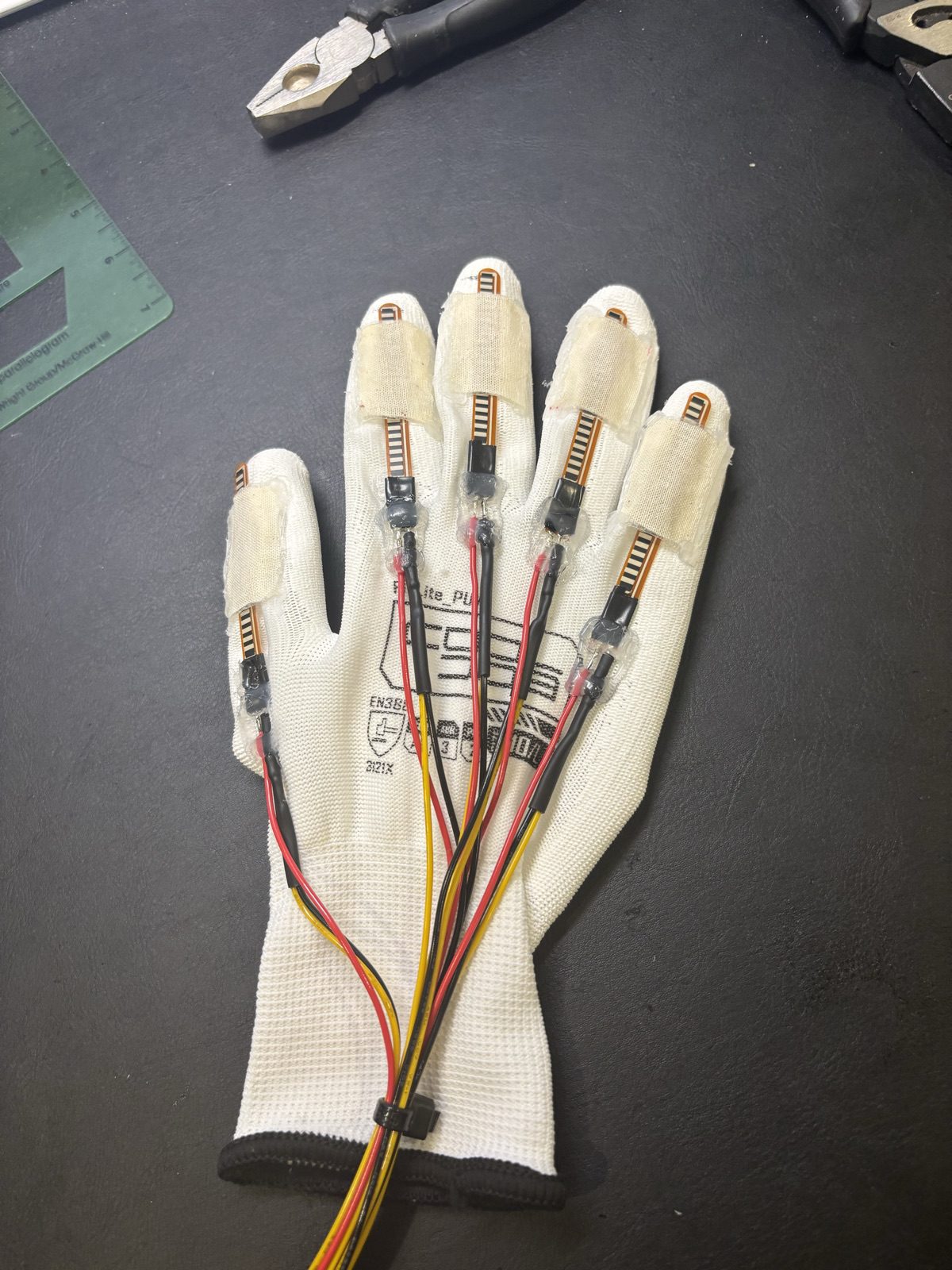
Lighter ring-link design, then one flex sensor per finger on fabric—same electronics and app, far less structure.
Third iteration: Switched to a lighter printed hand design with ring links around the middle of each finger, making it easier to put on and more comfortable to wear. The rotary encoders mounted poorly on the new joints, which led me to flex sensors—the board already reads analog voltage, so nothing else had to change.
Fourth iteration: Replaced the encoders with flex sensors on a fabric glove, one per finger, wired through voltage dividers to the same board. The electronics and the app stayed the same while the wearable went from a rigid frame to a glove, with the 3D-printed parts now supporting it rather than forming the structure.
12+ sites · 3 countries
Staff training and session guides help centers run Ripple independently and incorporate it into therapy and activity programming.
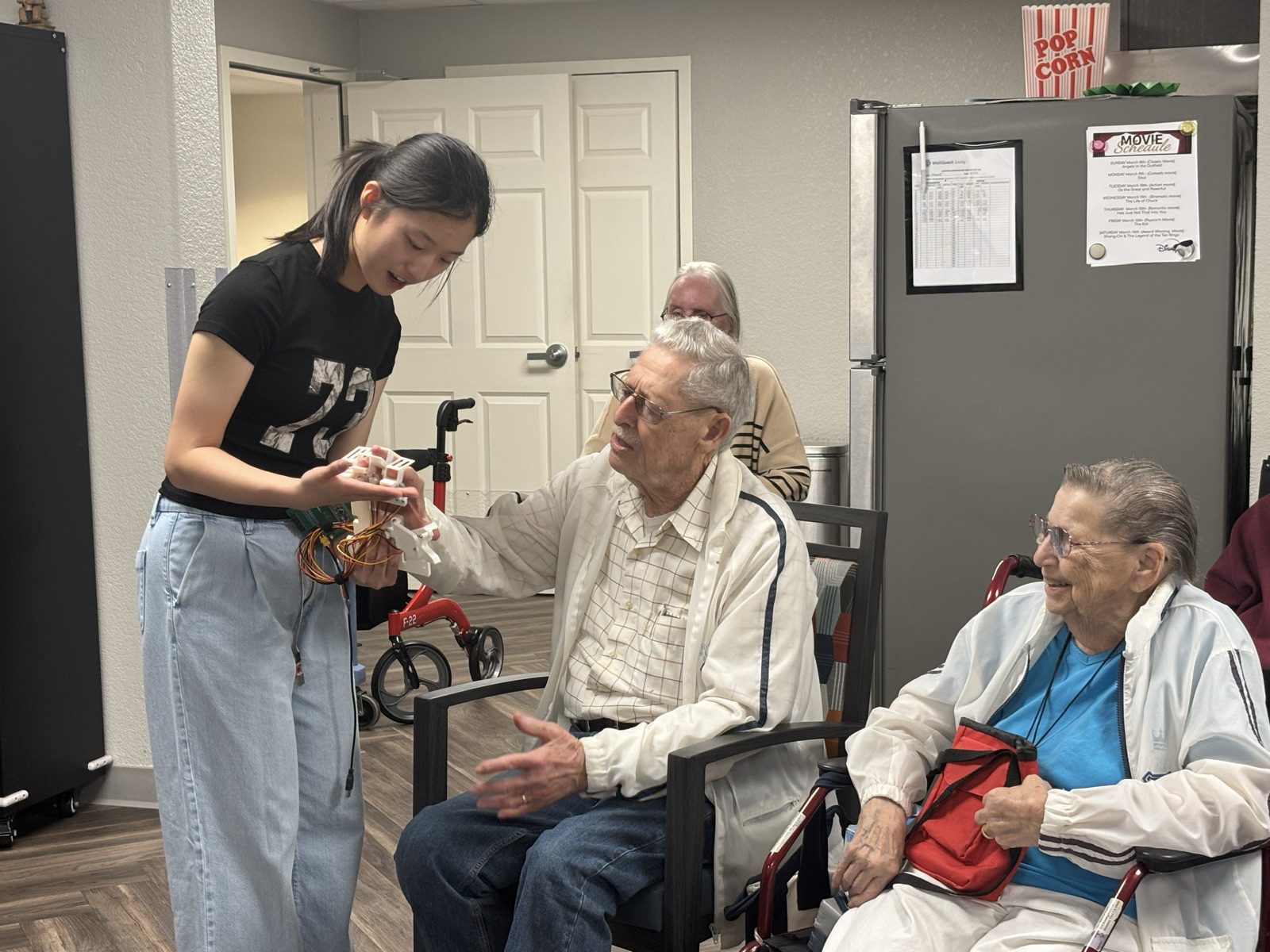
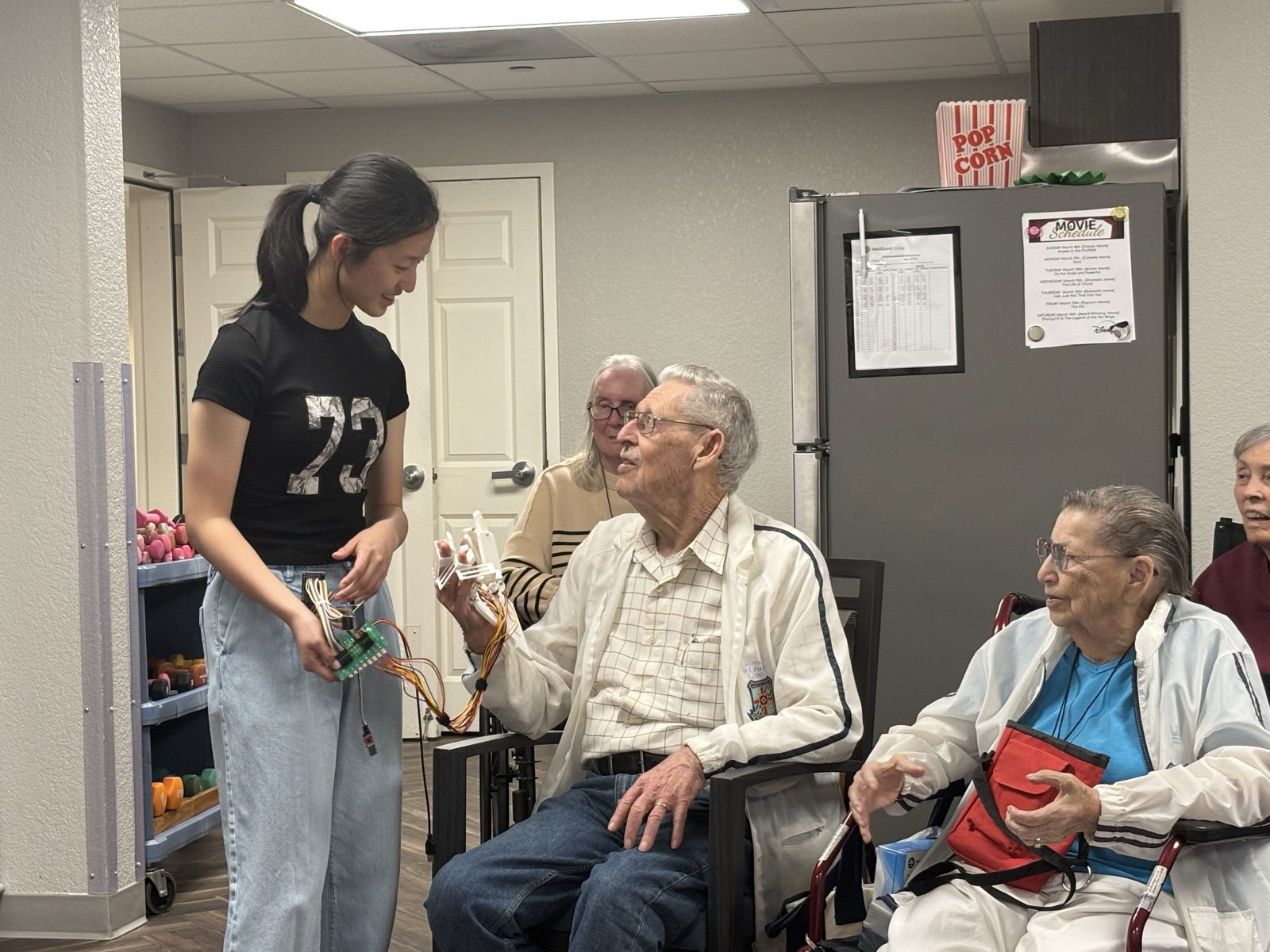
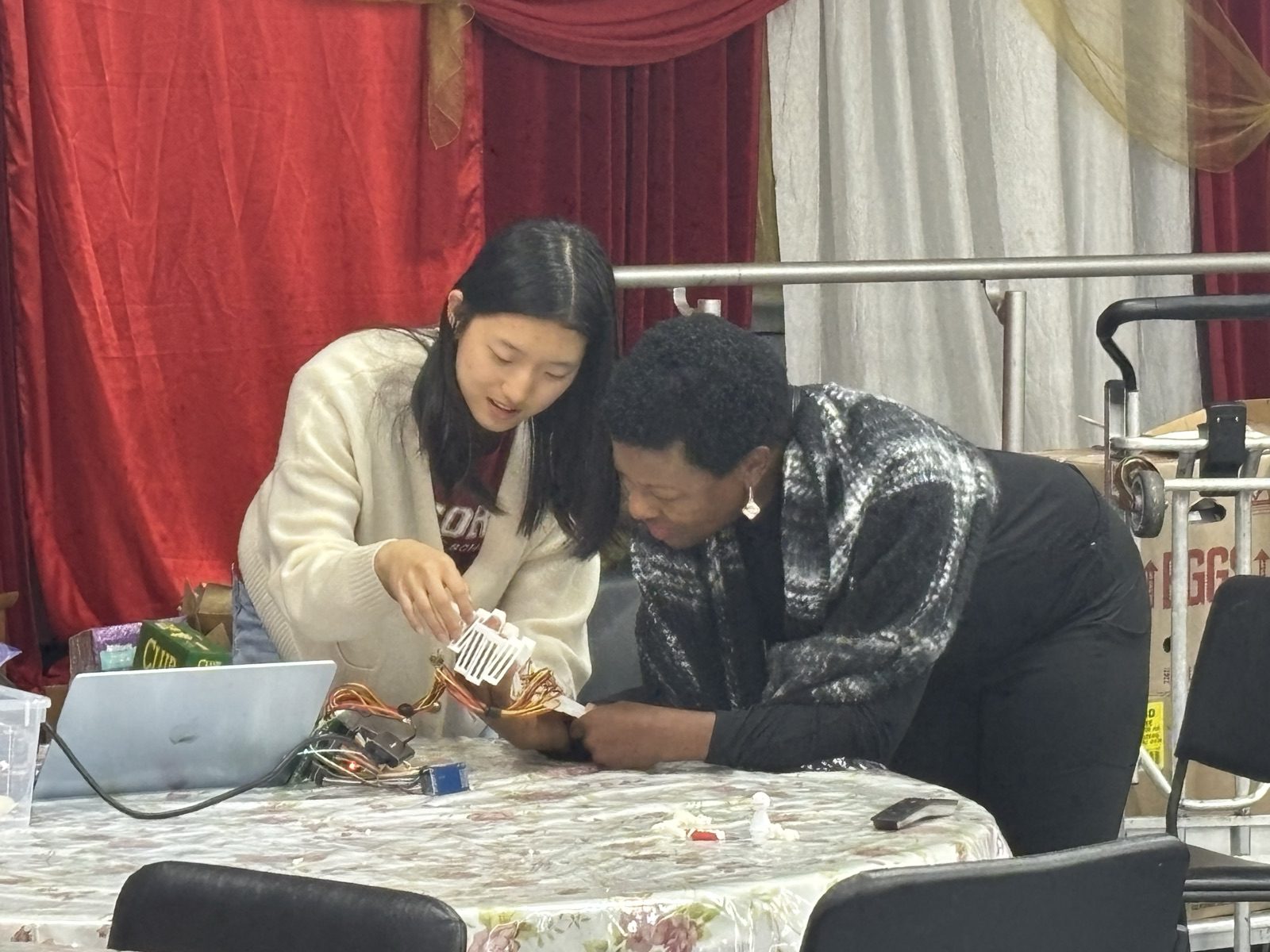
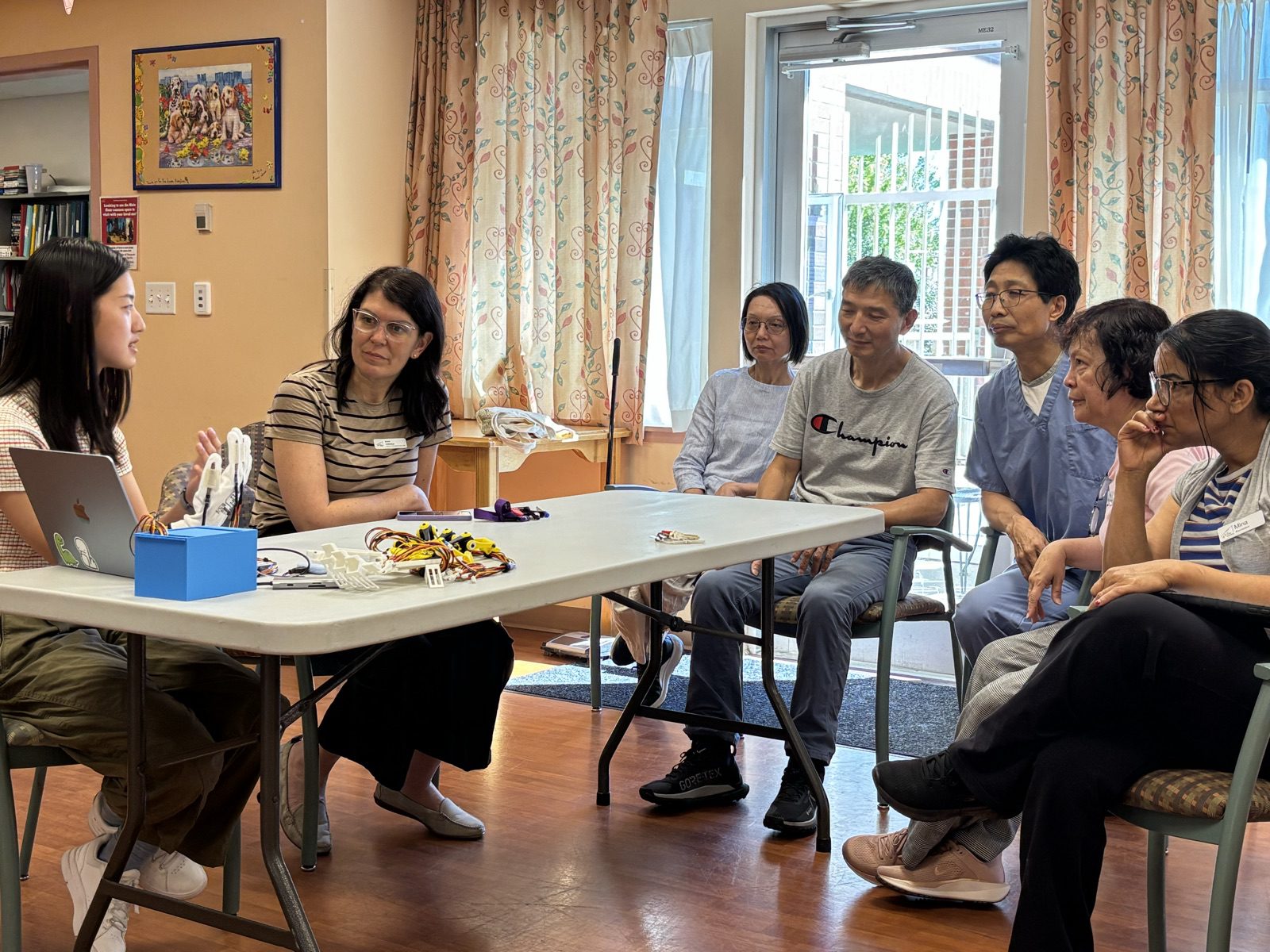
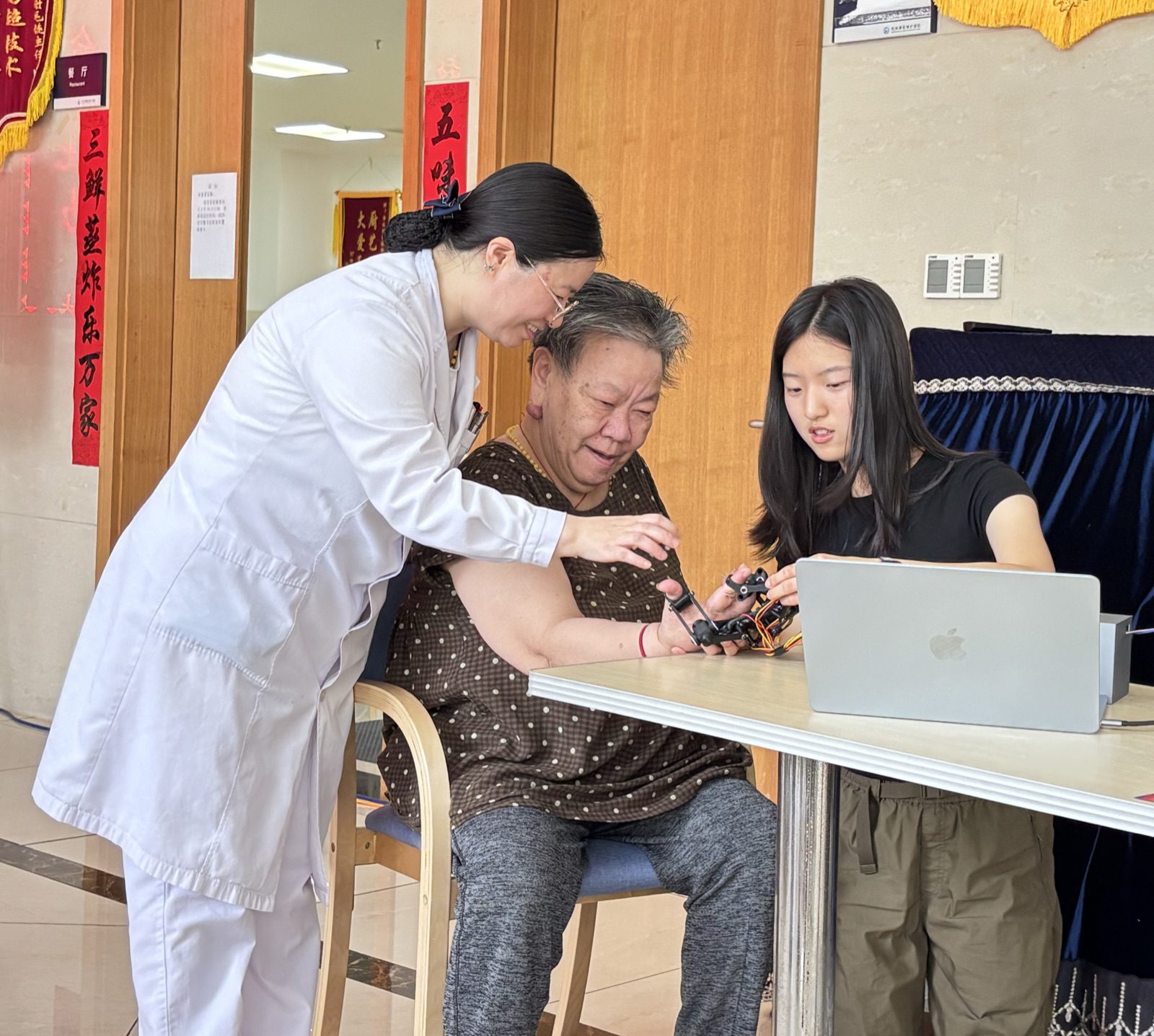
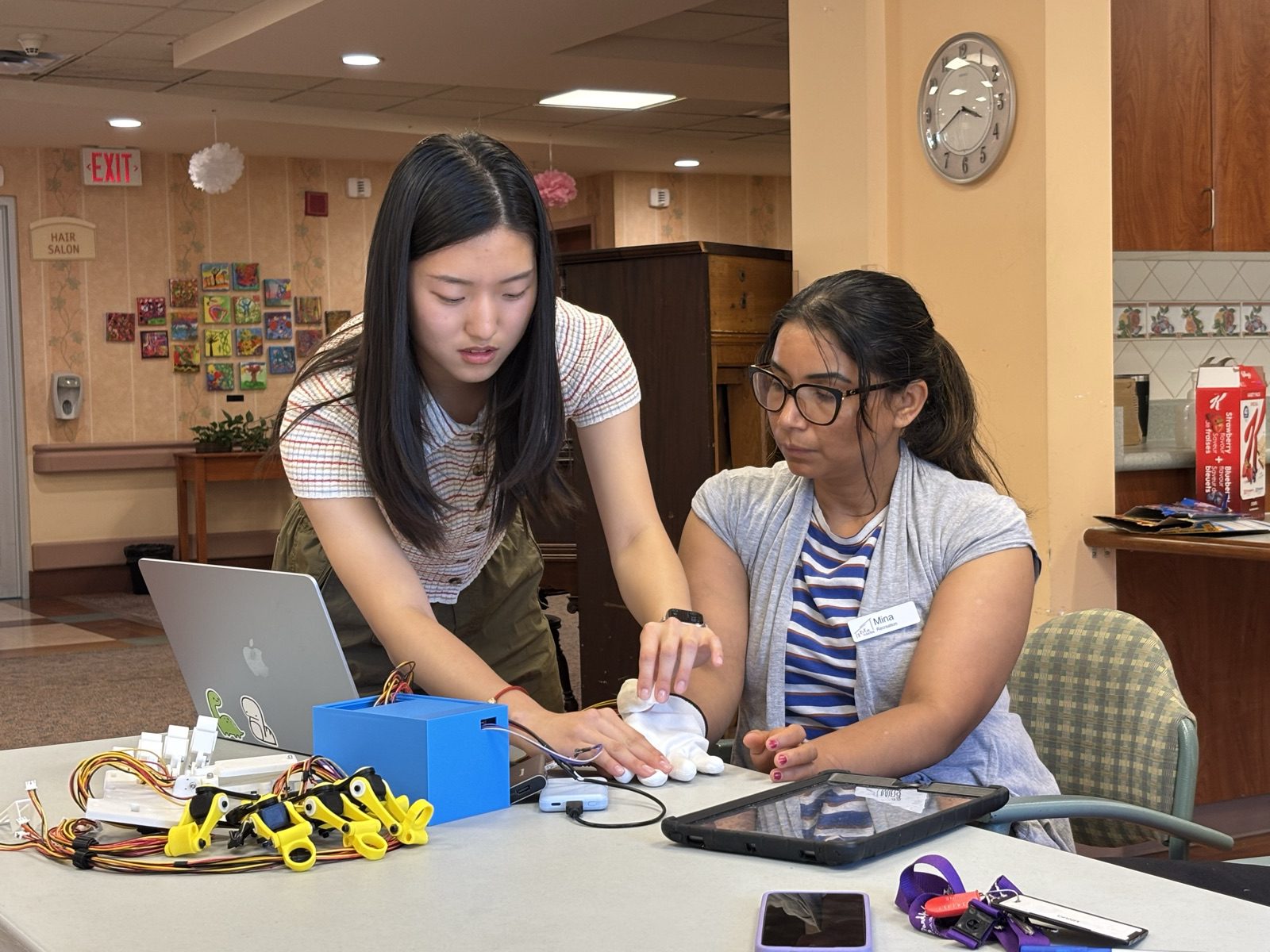
Ripple is available as a web app at ripplemusic.org and runs as an ongoing program at 12+ senior centers, nursing homes, and youth centers across the US, China, and Canada. I have been training staff, creating session guides, and working with center directors so they can run sessions independently; the centers have been incorporating Ripple into their therapy and activity programming, with residents and staff seeing real potential for it in rehabilitation.
“Ripple really helped veterans feel more confident and opens doors for those who want to play an instrument again.”
Our team found Ripple to be an exciting tool that really helped veterans feel more confident in their abilities. It also opens doors for those who used to play an instrument or are interested in learning again.
“Simple to understand, safe and convenient… allowing the elderly to feel warm and seen.”
This fingertip playing device is suitable for the physical state of the elderly, simple to understand, safe and convenient, and instantly attracts the attention of all the elderlies present… [Yanzi He] used creativity and love to break the shackles of age barriers, allowing the elderly to feel warm and seen.
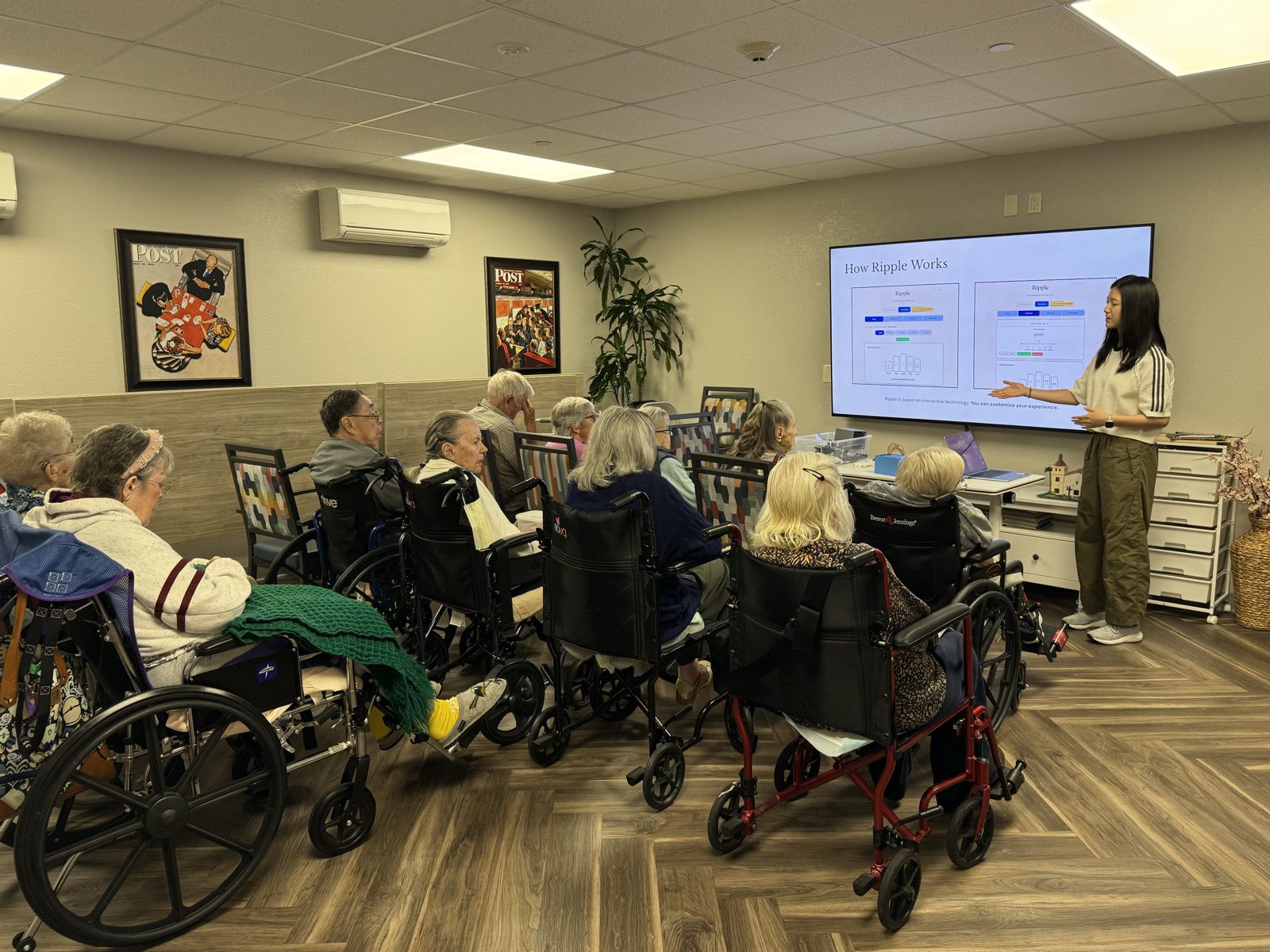
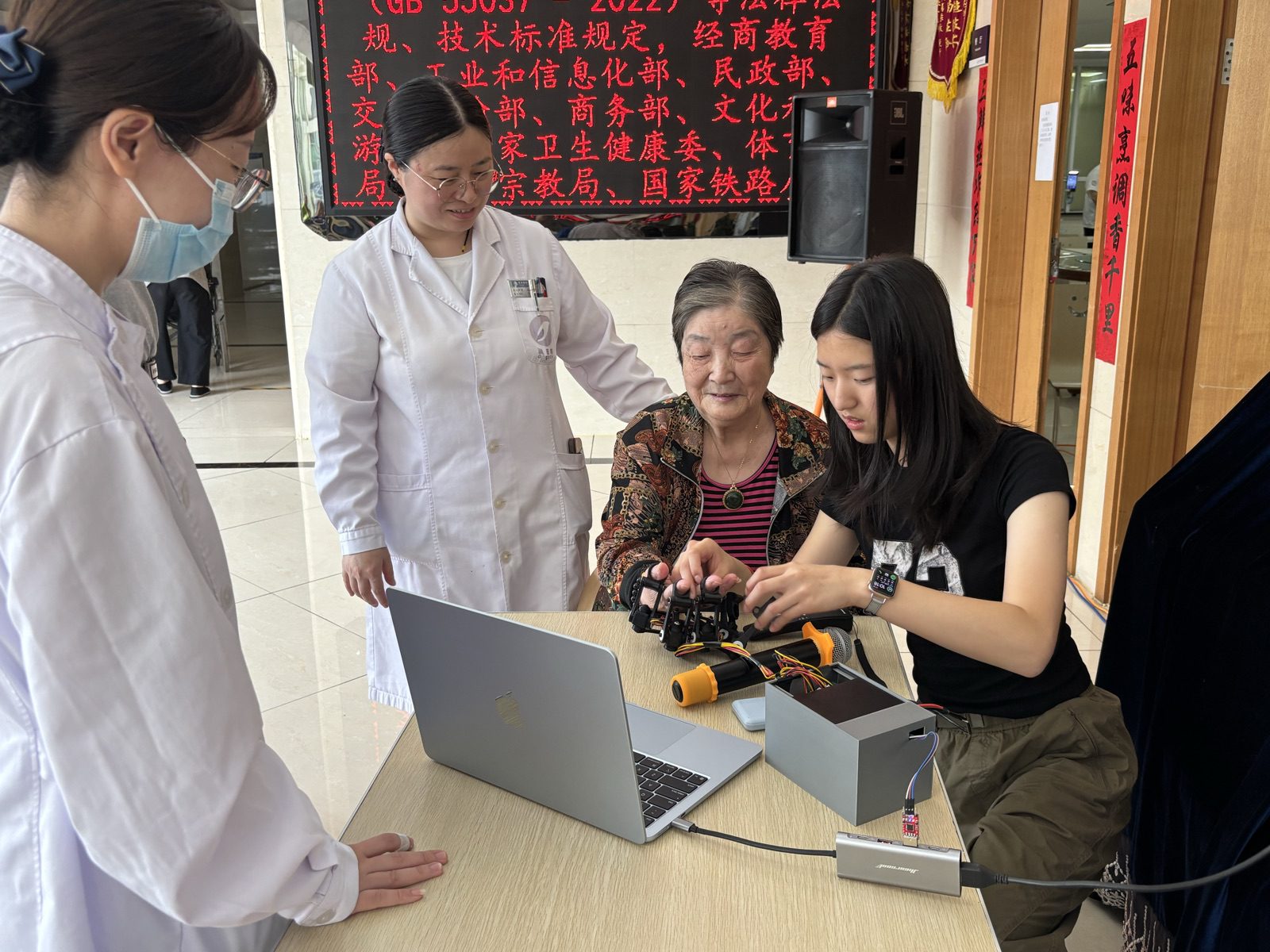
Ripple's deployment became the subject of an extended abstract at an RSS 2026 workshop.
RSS 2026
Embodied4Arts: Robots as Creative Partners for Artistic, Expressive, and Craft Tasks
Ripple: A Sensor-Glove Music Interface Deployed Across Senior Communities
Work in progress